
Social Media Materials
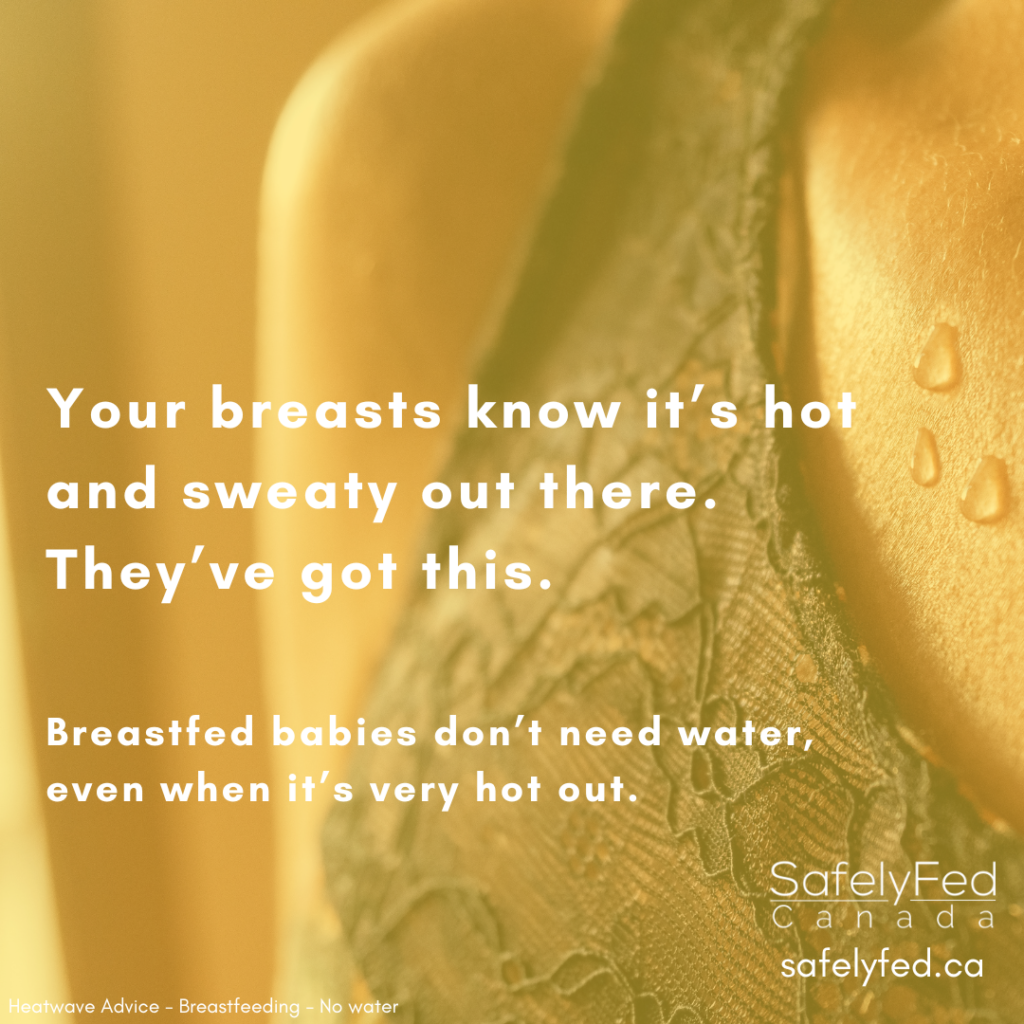
Heat Wave – Breastfeeding – No Water
Babies don’t need extra water to stay hydrated when they are breastfed - just make sure they can get there! Bodyfeeding provides all the nutrients and fluids that a baby needs - in perfect balance no matter what the temperature is. You may notice that your baby cues to feed more often, comes on and off more or nurses for less time than usual. That’s part of the plan! The “on and off” pattern of feeding tends to result in more volume of milk intake. * Offer more often * Switch sides, even if you normally don't offer both breasts * Reduce distractions, including discomfort, by nursing lying down in a cool, darkened room * Use a damp cool washcloth to wipe your faces and bodies * Drink plenty of fluids Learn more: BC Health Link - Safety for infants and young children during extreme heat | HealthLink BC https://www.healthlinkbc.ca/.../safety-infants-and-young... NHS - FAQ: What are the recommendations for giving water during infancy? https://elht.nhs.uk/.../Water_during_infancy_FAQ_final_1.pdf WHO - World Breastfeeding Week: Extreme heat and breastfeeding https://www.lshtm.ac.uk/.../world-breastfeeding-week...
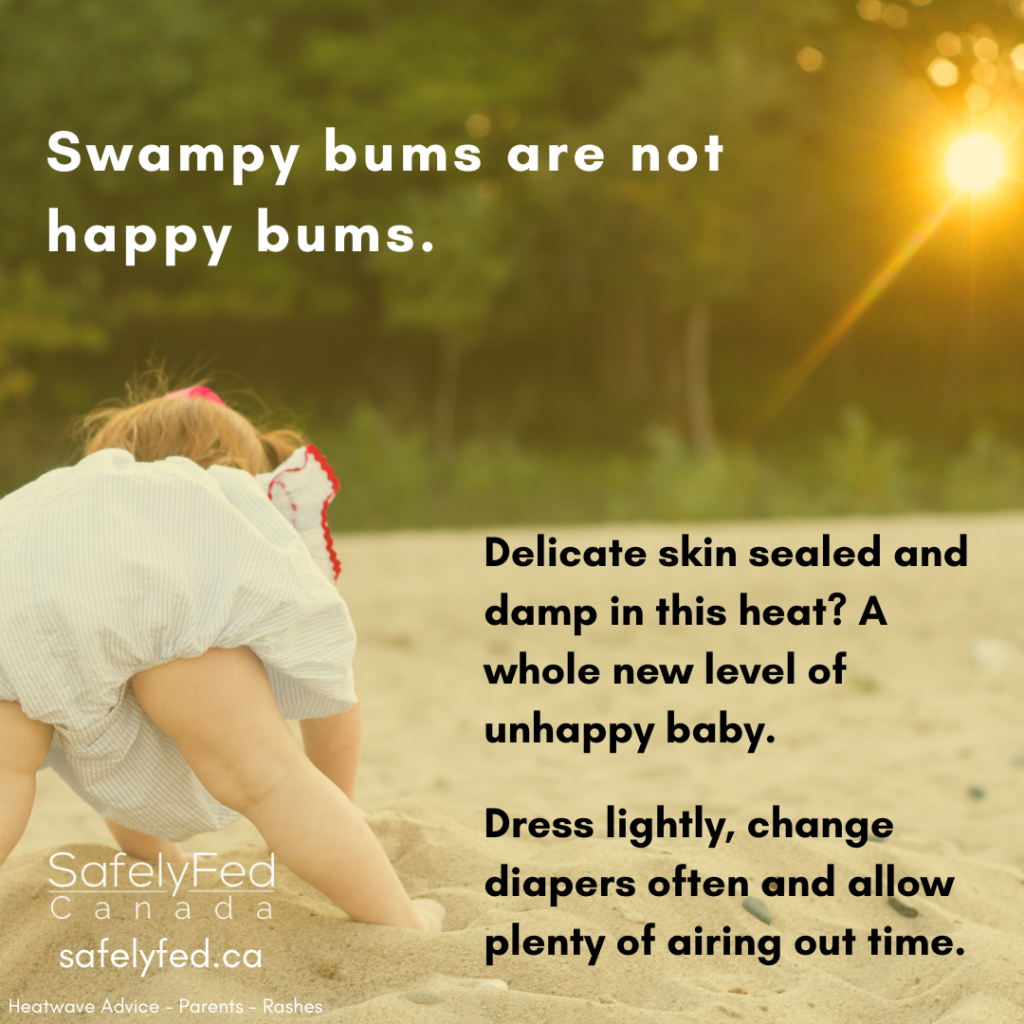
Heat Wave – Parents – Rashes
Heat rash can add to the misery of a heat wave - and make everything harder when everyone is already cranky. Prevent rashes by keeping skin dry, especially in folds and areas that rub together: * Change diapers often * Maximize naked time * Light breathable absorbent fabrics If a heat rash starts to appear, * Cool off with a lukewarm bath or damp washcloth, then air dry * Spend as much time as possible in cool, well ventilated spaces * Speak to your baby’s doctor before applying any creams or lotions Learn more: AboutKidsHealth - Heat rash (miliaria) https://www.aboutkidshealth.ca/heat-rash-miliaria NHS - Heat rash (prickly heat) https://www.nhs.uk/conditions/heat-rash-prickly-heat/ [includes photos]
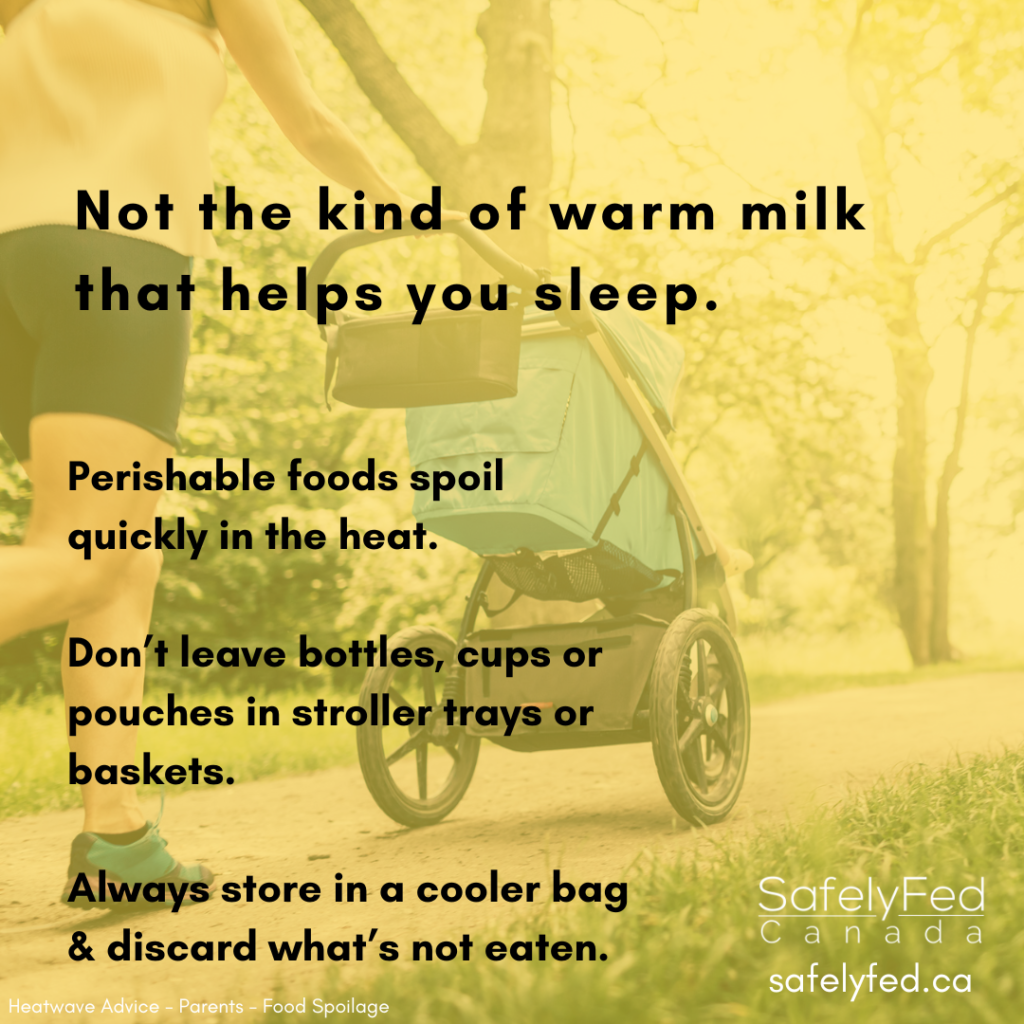
Heat Wave – Parents – Food Safety
Long summer days are perfect for being out and about, which means eating on the go. While some snacks can be safely transported without chilling, baby food pouches and baby formula are highly perishable. Baby formula is especially prone to spoilage. Yet, younger babies are also more likely to need to eat while you’re out. It’s easy to lose track of how long they have been out, especially since you usually can’t see if something is spoiled. Foods can quickly reach the ideal temperature for germs to grow. Liquids in cup holders or stroller baskets can also get much hotter than you’d expect, potentially resulting in burns on delicate skin. * Breastfeed when you’re out rather than using bottles * Offer only water as a drink for older babies and young children * If using formula, use ready to feed single serving containers for feeding on the go * Store items that can spoil in a cooler bag with ice, even before opening * Throw out anything that has been opened
Heat Wave – Parents – Sleep
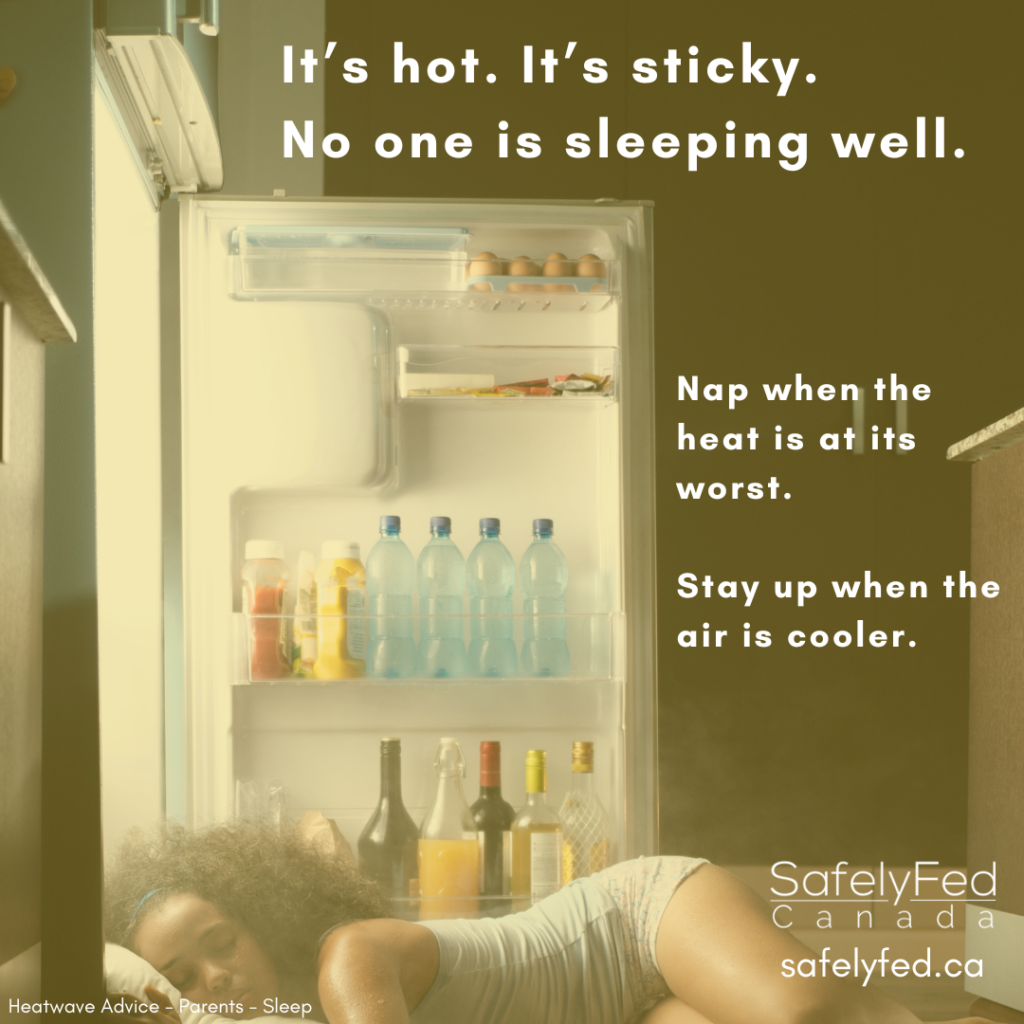
The dog days of summer are hot, but it’s often the humid sticky nights that make it the hardest to get through a Canadian heat wave. If you can’t cool your whole home, focus on creating a cool place to sleep and nap: * The lowest floor is usually the coolest * Firm mattresses tend to be less hot * Keep blinds drawn and doors closed during the height of daytime heat * Use ceiling and floor fans to keep air moving * Misters and cool damp washcloths add extra relief Shift your routines to avoid activity when the heat is at its worst: * Plan park trips or other outdoor play for the early morning or late afternoon or evening * Go to indoor programs or activities during the middle of day * Prepare no/low-cooking meals, especially lunch * Focus on a longer afternoon nap or quiet time for the whole household
Last updated January 24, 2025 11:36AM (EST)
Questions or suggestions? Please email us at info@safelyfed.ca